Replacing the Roof on an Older Macon Home Before Winter Rains: Decking, Ventilation, and Historic District Considerations
Old decking, tired attic vents, and district review rules can all change the scope of a replacement on an older house.
Schedule your estimate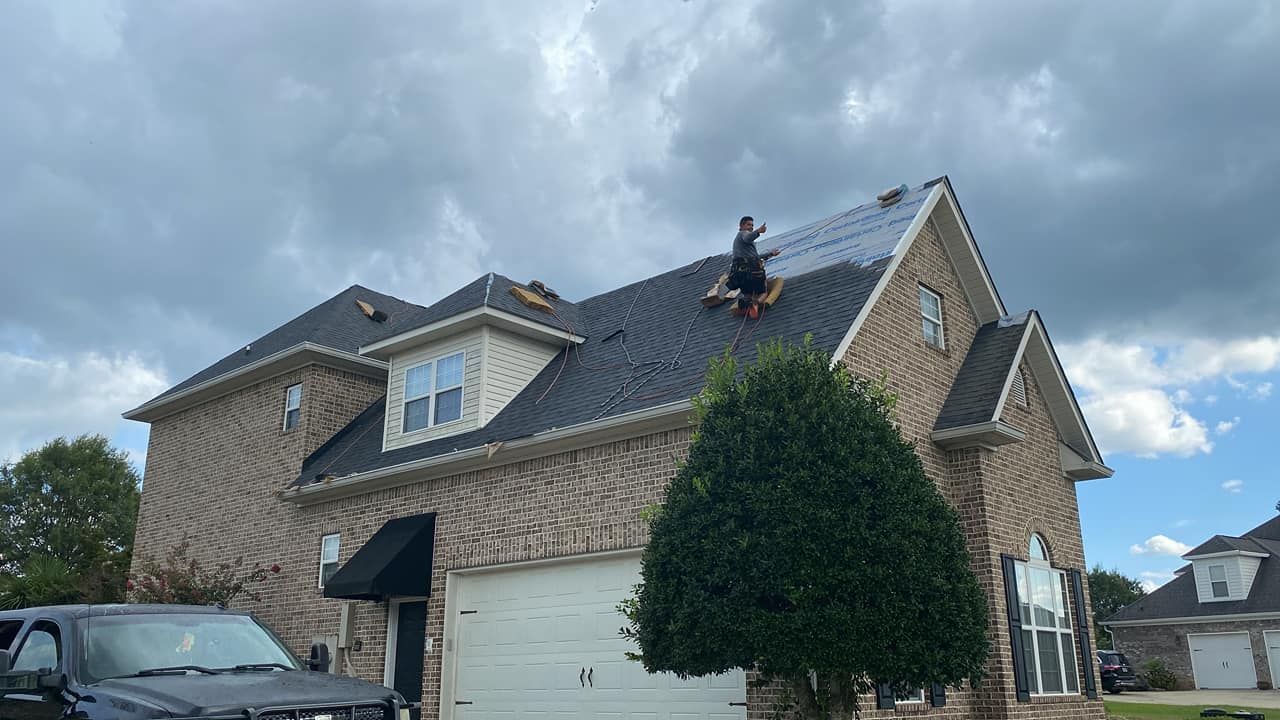
The best time to replace the roof on an older Macon home is the dry, mild stretch of fall, before winter's long soaking rains arrive. On a house that has stood for decades, the shingles are the easy part. The decking underneath, the way the attic breathes, and any historic district review are what decide how the new roof holds up.
Winter rain in Middle Georgia rarely shows up as one dramatic storm. It comes as days of cold, steady drizzle that finds every weak spot an old roof has. A roof that limped through the summer thunderstorms can start dripping in January, when the house is closed up and getting a tarp on is a lot harder. Fall also leaves time to deal with whatever an old roof is hiding.
In this guide
Why Late Fall Beats Waiting for Spring
Fall gives a roofing crew the two things a tear-off needs: dry days and mild temperatures. Once the old roof comes off, the house is open until the underlayment goes down, and clear days get scarce in winter. That matters when you're planning a full roof replacement rather than a quick patch.
Temperature counts too. Asphalt shingles have a strip of adhesive on the back that bonds each course to the one below it, and that strip needs warmth from the sun to seal. This breakdown of how a shingle is built shows where it sits. Shingles laid during a cold, gray week can sit unsealed for a while, and wind lifts unsealed edges more easily.
Schedules also fill up through fall, so getting a tired roof looked at now leaves time to compare estimates. These signs usually mean it shouldn't wait for spring:
- Shingles that are curling, cracked, or missing after summer storms
- Granules piling up in the gutters or at the bottom of downspouts
- Water stains on the attic side of the decking, even small ones
- A roofline that dips between the rafters
What's Under the Shingles on an Older Home?
On most older homes, the decking is very different from what goes on new construction today. Decking, also called sheathing, is the layer of wood the underlayment and shingles are nailed to. Nobody can fully see it until the old shingles are off.
Plank Decking
Many homes built before plywood became common have plank decking: individual boards laid across the rafters, often with gaps between them. Some are sound. Where gaps are too wide or boards have cupped, shingle manufacturers may call for a layer of plywood or OSB (oriented strand board, a panel made from pressed wood strands) over the boards before new shingles go on. Ask how your estimate handles that.
Extra Layers and Soft Spots
Older roofs sometimes carry two layers of shingles because a previous owner roofed right over the original. Tearing off both adds labor, and it often uncovers rot along the eaves, in valleys, and around chimneys and old vent boots.
A clear estimate says how damaged decking is priced, by the sheet or by the board, and how you'll be told before it's replaced.
Attic Ventilation in an Older House
An attic needs air coming in low at the eaves and leaving high near the ridge, and many older houses were never set up that way. Some rely on gable vents alone, or on soffit vents painted shut years ago.
Winter is when poor ventilation shows itself. Warm, damp air from the living space drifts into a cold attic and condenses on the underside of the decking. Over a few seasons that moisture can stain and soften the wood and rust the nails on a roof that never actually leaked.
A replacement is the easiest time to fix it. Points to raise with your roofer:
- Whether the soffits can be opened up or vented so air gets in at the eaves
- Whether a ridge vent fits the shape of the roof
- What happens to the existing gable vents or attic fan, since mixing exhaust types can pull air the wrong way
- Where the bathroom and kitchen fans actually vent, because a fan that dumps into the attic undoes the rest
Building codes and shingle manufacturers both set ventilation requirements, and shingle warranty coverage can depend on meeting them. Get the ventilation plan written into the estimate, not a single line that says 'install vents.'
Historic District Rules Can Change the Plan
If the house sits in a locally designated historic district, a roof replacement may need design review before work starts. Macon has a number of historic districts, and local review generally looks at what can be seen from the street: roofing material, color, and changes to the roofline, dormers, chimneys, or trim.
A like-for-like replacement, asphalt for asphalt in a similar color, is often treated more simply than a switch to something different. Moving from shingles to metal, adding vents that show from the street, or taking down an old chimney are the kinds of changes more likely to need approval, which is commonly called a certificate of appropriateness. If you're weighing a different material, read up on choosing a roofing material before the review, not after.
It also helps to know the difference between local designation and a National Register listing. A National Register listing on its own usually doesn't restrict what a private owner does with their own money, while local district rules can. If you're not sure which applies, ask the local planning office before you sign anything, and build any review time into the schedule so a delay doesn't push tear-off into the wettest weeks.
How American Roofing & Renovation Handles an Older Roof
Surprises on an older roof are easier to handle when found early. American Roofing & Renovation offers a free, no-obligation roof inspection, which is the right time to look at the decking from the attic side, see how the attic vents, and talk through what the tear-off could uncover before you have a number in hand.
Decking and ventilation details also tie into the shingle warranty. The company shows CertainTeed SELECT ShingleMaster and CertainTeed Master Craftsman badges, and its installations can carry extended warranty coverage through CertainTeed. Ask which terms apply to your roof and what the installation has to include to qualify, so the coverage you're promised lines up with the work being done.
Older Homes and Winter Weather in Macon
The city has a deep stock of older houses, from early twentieth century homes near downtown to brick ranches built after World War II. Many have been reroofed more than once, and each round can leave a second layer or a covered-over vent behind.
The weather works on those roofs from both ends of the year. Long, hot, humid summers and strong sun dry out shingles and cook attics that don't vent well. Summer thunderstorms bring wind, hail, and oak and pine limbs down on worn roofs. Then winter turns to gray, rainy weeks with cool nights, when condensation builds in attics and slow leaks finally show up as ceiling stains.
Mature trees add one more problem: leaves and pine straw fill valleys and gutters through fall and hold water against the roof edge just as the rain picks up.
Book the Inspection While Fall Is Still Dry
If your roof is old enough that you're wondering whether it'll make it through another winter, get it inspected now while there's time to plan around the answer. When you're deciding who to hire for an older home in Macon, look for a roofer who checks the decking, the attic, and the district rules before quoting. American Roofing & Renovation offers a free, no-obligation inspection where you can raise all three. Call (478) 312-4304 or request your inspection online.
Before You Sign a Replacement Contract
Can a new roof go over my old shingles?
Sometimes, but it's rarely the best choice on an older home. A roof-over adds weight, hides decking nobody can inspect, and seals any rot or soft spots under the new layer. If the house already has two layers, a third is usually off the table. A full tear-off costs more up front, but it's the only way to see the wood and fix it before winter.
How long does a roof replacement on an older house take?
The tear-off and install on a typical home often take a day or two of good weather, though older houses can run longer. Two layers of shingles, replaced decking, new vents, and cut-up rooflines all add time. Historic review, material orders, and rain days can move the start date, so the time from signing to finishing is usually longer than the work itself.
Will I need to leave the house during the work?
Most people stay home. Expect steady noise and some vibration through the walls during tear-off, and keep pets and children away from the work area and the driveway. Take pictures and fragile items off walls that share the attic space, since the hammering can shake them loose. If someone in the house works nights or needs quiet for health reasons, plan around those days ahead of time.
Does a new roof fix condensation in the attic?
Not by itself. Condensation comes from warm, damp air meeting cold wood, so the fix is about airflow and where the moisture comes from. Balanced intake and exhaust vents help, and so does sealing gaps around ceiling lights and the attic hatch and making sure bath fans vent outside. New shingles over the same stale attic can show the same stains on new decking within a few winters.
What color choices will I have in a historic district?
That depends on the district's guidelines and the review itself. Review boards often favor colors and textures close to what the house had originally or what's common on similar homes nearby. Bring a few sample colors to the conversation instead of a single pick, and get any approval in writing before materials are ordered, because a returned order costs time you may not have before winter.
Should the gutters be replaced at the same time?
It's worth considering. The drip edge and gutters meet at the eave, so replacing one without the other can leave an awkward fit along that edge. If the gutters are sagging, pulling away, or rusted through, doing both together means one crew is responsible for the whole edge. If they're in good shape, they can usually be taken down and rehung, so ask which makes sense for your house.
Get Ahead of the Winter Rain
A dry fall week is the easiest time to open up an older roof, check the wood underneath, and close it back up properly. Call (478) 312-4304 or contact us online.
Schedule your estimate